Florida has always sold itself on its water. Nearly 8,000 miles of coastline, nine million acres of estuaries and inland waterways, and a boating culture that runs from weekend pontoon trips to serious offshore fishing. But that same water is getting busier every year, and the accident numbers are starting to show it. More boats, more first-time operators, and more congestion on popular waterways are combining to push injury and fatality totals upward across the state, particularly in South Florida’s crowded canal systems and coastal channels.
A State Built Around the Water
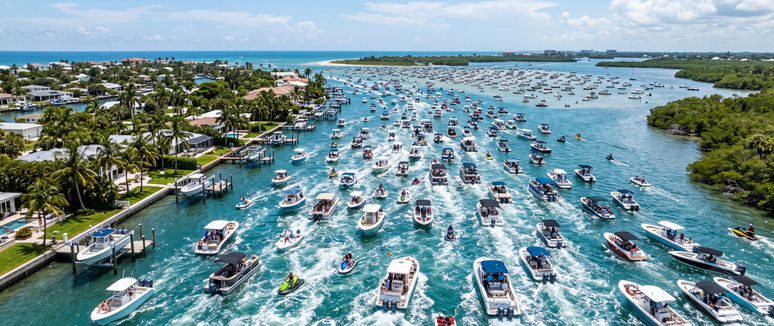
Florida consistently registers more recreational vessels than almost any other state in the country, and that number has kept climbing since the surge in outdoor recreation that began in the early 2020s. Marinas that once had open slips are now waitlisted, and sandbars that used to feel spacious on a Saturday afternoon now resemble parking lots at rush hour. Broward County alone is laced with more than 300 miles of navigable waterways, much of it narrow, canal-style channels lined with docks, seawalls, and moored vessels, a layout that leaves little margin for error once traffic picks up.
Tourism adds another layer. Visitors who rent jet skis, pontoon boats, or center consoles for a single afternoon are often piloting unfamiliar vessels after only a brief safety briefing. Combine that with longtime local boaters who assume the water will behave the way it always has, and the conditions are set for close calls to turn into real collisions.
Why Accidents Are on the Rise
Boating accident data collected at the federal level points to a consistent set of causes: operator inattention, inexperience, excessive speed, and alcohol use. Unlike driving a car, there are no lane lines or traffic signals on the water, and right-of-way rules are far less intuitive to someone who only boats a few times a year. Add in glare, wake from passing vessels, and the reduced maneuverability of larger boats, and even a momentary lapse in attention can end in a collision with another vessel, a fixed object, or a swimmer.
Alcohol remains a persistent factor in serious and fatal boating accidents nationwide, a pattern regulators have flagged for years without much improvement. Warm weather, long weekends, and a relaxed “it’s just a boat” mentality make it easy to underestimate how quickly things turn dangerous once speed, water, and impaired judgment mix.
The Human Cost Behind the Statistics
The consequences of a boating accident are rarely minor. Vessels lack seatbelts, airbags, and crumple zones, so the forces involved in a collision or an ejection transfer almost directly to the people onboard, who can be thrown from the boat, struck by the propeller, or pinned between hulls. Drowning remains one of the leading causes of boating-related death nationally, and researchers studying water fatalities have repeatedly found that most victims were not wearing a life jacket at the time, a detail tracked closely by the CDC’s drowning prevention data.
Even non-fatal accidents often leave survivors with spinal damage, fractures, severe lacerations, or head trauma, common outcomes in vessel collisions and falls overboard. Recovery can stretch on for months, and for families, the toll of a serious boating accident can rival that of a major car crash.
Education Requirements Haven’t Kept Pace With Demand
Florida does require boating safety education for anyone born on or after January 1, 1988, who wants to operate a vessel with ten horsepower or more, and the state outlines those requirements through the Florida Department of Highway Safety and Motor Vehicles. In practice, plenty of operators fall outside that rule, whether due to age, an exemption, or simply inconsistent enforcement on the water compared to the road. Rental operations, in particular, often rely on a short verbal walkthrough rather than any real demonstration of competency before handing over a vessel that can weigh several thousand pounds and move at highway speeds.
Weather adds a further wrinkle many recreational boaters overlook. Afternoon thunderstorms and rapidly changing sea states are common along Florida’s coast, and the National Weather Service maintains dedicated marine safety guidance because so many boaters head out without checking a marine forecast first. A boat that feels stable at 10 a.m. can be fighting three-foot chop by early afternoon, catching inexperienced operators off guard.
What Injured Boaters Should Know
Florida law allows people hurt in a boating accident to pursue compensation when another operator’s negligence, recklessness, or intoxication caused their injuries, whether that operator was piloting a private vessel, a rental, or a commercial charter. These claims can be more complicated than a typical car accident case, often involving marine insurance policies, rental liability waivers, and questions about which state or federal regulations applied.
Anyone recovering from a serious injury on Florida’s waterways benefits from having that complexity sorted out by someone who handles these claims regularly. Consulting with experienced accident‑injury counsel in Fort Lauderdale early on helps you preserve evidence, negotiate with insurance adjusters, and clarify the value of your claim before accepting any settlement.
Florida’s waterways aren’t getting any less popular, and that trend shows no signs of reversing. As more boats compete for the same stretches of water, operators, renters, and passengers alike stand to benefit from taking the risks as seriously as they would on any crowded highway.
